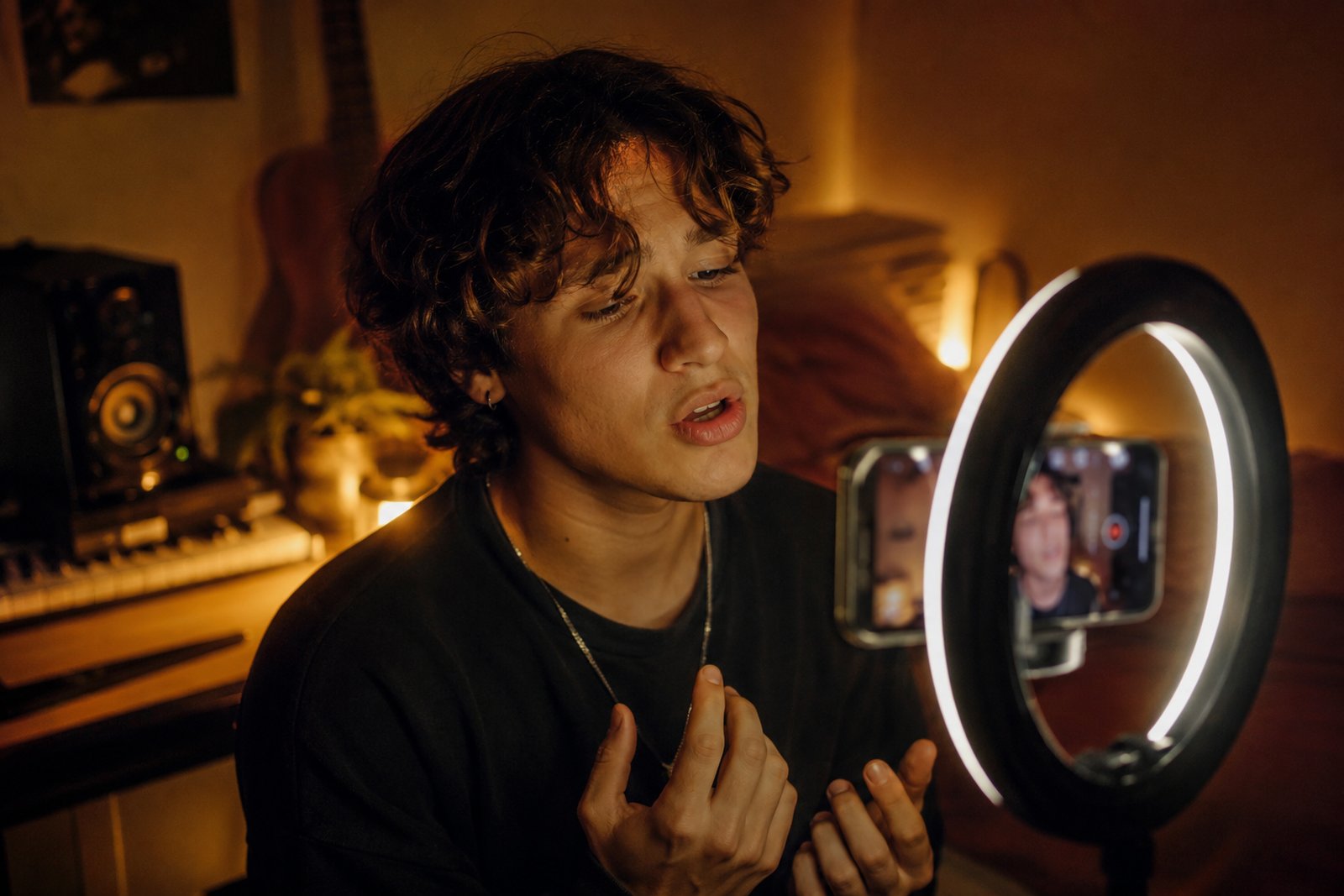
Why most artists fail on TikTok
Most artists fail on TikTok because they promote a sound instead of a person. The clip trends, the artist stays anonymous, and conversion to streams has fallen hard since 2020. The fix: put your face and name in the first seconds, register every version of your sound, and have the save funnel ready before the spike.
TikTok still breaks more artists than any other platform. It also quietly buries more artists than any other platform, and usually for the same three reasons. None of them are about luck.
The conversion collapsed
Chartmetric ran the numbers in late 2025. In 2020, one TikTok post correlated with roughly 738 Spotify streams. By 2025 that was down to about 275. That is a 63 percent drop in conversion, while the time it takes a sound to blow up collapsed from around 340 days to 48. Translation: virality is faster, shorter, and worth less per view than it has ever been.
So when an artist builds the whole campaign around chasing one viral moment, they are optimizing for a peak that lasts days and pays in exposure. If nothing is waiting to catch that exposure, it evaporates.
The sound gets famous. You don't
TikTok discovery is sound-first. People engage with fifteen seconds of a feeling, not with the person behind it. Academic work published in 2025 documented what every manager already suspected: a viral sound routinely produces no durable fanbase at all.
It gets worse. Sped-up and edited versions of tracks regularly get credited to whoever uploaded them, not to the artist. Pex documented a sped-up hit with 142,000 videos credited to a random user named Sara. TikTok allows one rightsholder per sound ID, so every one of those videos pointed traffic and royalties away from the artist who made the song.
If your face, name and story are not in the video, the trend absorbs the credit.
You are posting formats that pay nothing
TikTok's Creator Rewards Program only pays on original videos of one minute or longer. The classic 15-second hook clip earns zero directly. Meanwhile Buffer's study of 1.1 million TikToks found videos over 60 seconds get 43 percent more reach and nearly double the watch time of mid-length clips, while 86 percent of everyone is still posting under a minute. Long content is the undersupplied format the algorithm is actively rewarding.
What the artists who win do differently
- They show their face and say their name and song title in the first three seconds, out loud and on screen. TikTok transcribes speech and reads on-screen text for search.
- They register and distribute every official version of a track, including sped-up and slowed, before teasing anything. Since April 2026, TikTok and SoundOn run derivative detection that routes royalties back to the registered original. Registered first means paid first.
- They build the funnel before the spike: a certified artist account, the in-app pre-release tool, and a save-this-song call to action instead of a link in bio.
- They cap the tease window. Months of teasing an unreleased song burns the moment before the song exists. The spike comes fast now. Be ready, then trigger it.
Fail on TikTok and the platform never tells you why. It just stops showing people your videos. These four habits are usually the difference.
Quick answers
Is TikTok still worth it for music artists in 2026?
Yes, but as a discovery engine, not a payout machine. Conversion per post is roughly a third of what it was in 2020, so TikTok works when it feeds a funnel: registered sounds, in-app pre-saves, and an identity people can follow.
How long should music TikToks be in 2026?
Mix in 60 to 90 second formats. Videos over a minute get more reach and watch time, and they are the only length that qualifies for TikTok's Creator Rewards payouts.
What is sound misattribution on TikTok?
When a sped-up or edited version of your track is uploaded by someone else, the sound can be credited to that uploader. Their name rides the trend, and royalties can route the wrong way. Registering official versions of your track at release prevents most of it.