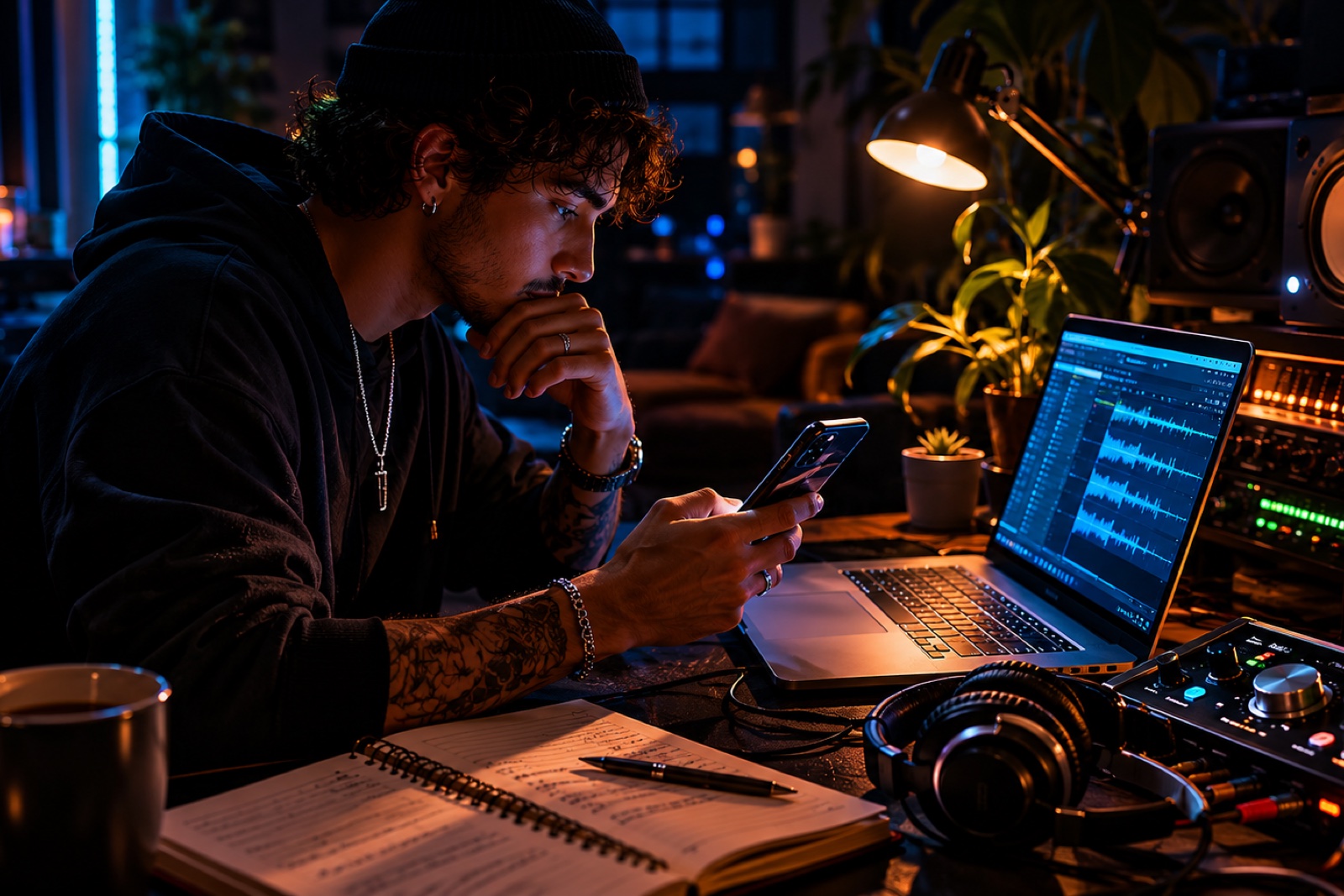
How to Send DJ Promos for a Techno Release: The List, the Timing and the Follow Up
To send DJ promos for a techno release, build a small, targeted list of DJs who play your exact style, and send a private promo page three to four weeks before release. Include final WAV and MP3 files, BPM, key, release date, label and catalogue number. Use per recipient watermarks to deter leaks, then follow up once and track who supports it.
You have a techno EP signed, mastered and scheduled. The label says it is sending promos, or you are self releasing and the job is yours. Either way the question is the same: how do you get the track into the USB sticks of DJs who will actually play it, before release day, without it leaking or landing in a folder nobody opens?
Most advice on DJ promos comes from companies selling promo services, and it shows. The real work is not the email blast. It is a list built with care, a promo page that answers every question a DJ has in ten seconds, sensible timing, and follow up that turns one play into a relationship. Here is how we run promos for techno and hard techno releases.
What is a DJ promo, and does it still work in 2026?
A DJ promo is an early, private copy of a release sent to DJs, radio hosts and mix series before it is out, so they can test it and play it while the release is building. In techno it still matters a great deal, because the genre spreads through DJ sets far more than through playlists. A track that a respected DJ drops at a festival weeks before release arrives with a story already attached.
What changed is the volume. Busy DJs receive far more promos than they can audition, so generic blasts get skimmed or ignored. The promos that work in 2026 are smaller, better targeted and easier to use.
Who should be on your techno promo list?
Start with quality, not size. One vendor guide suggests 50 to 150 targeted DJs for a single release, another a few hundred contacts across DJs and media. For an emerging artist or small label, a focused list you can personally vouch for will outperform a bought list every time.
Build it in tiers:
- Tier one: 10 to 20 DJs whose sets you have actually listened to and who play this exact style. These get a personal note.
- Tier two: working DJs in your scene and at a similar level, residents, radio and podcast hosts, mix series curators.
- Tier three: media and tastemakers, such as blogs, YouTube channels and curators who chart or review techno.
Check fit before adding anyone. If your record is 150 BPM industrial and a DJ plays 128 BPM hypnotic techno, they will not play it and may start ignoring you. Look at their recent tracklists and charts first.
For anyone in the EU, including the Netherlands, treat the list with GDPR in mind. Only add people whose contact details you obtained in a professional context, say clearly who you are, and give an easy way to opt out. A clean list is also a better list.
If you are signed to a label, agree early who sends what. Many labels run their own promo list and expect you to add your personal contacts to it rather than send a second campaign. Two separate emails for the same record, a few days apart, look disorganised and split the feedback. Share your tier one names with the label and ask to see the promo page before it goes out.
How far before release should you send DJ promos?
Sources disagree, recommending anything from two to six weeks. For club techno, three to four weeks is a good default. It gives DJs at least two weekends to test the track, and it is short enough that interest has not faded by release day.
Go earlier, around six weeks, if you want support in festival sets or radio shows that are recorded well in advance. Go shorter for a quick single or an edit. Whatever you choose, state the release date in the subject line and on the promo page, because a DJ who does not know when a track is out cannot plan around it.
What should a DJ promo include?
Make the promo usable in under a minute. A DJ should be able to listen, decide and download without opening a second email.
- Mastered, final audio only. WAV for downloads, plus a 320 kbps MP3 as an alternative. Never send unfinished mixes.
- BPM and key for every track, because DJs plan sets around both.
- Release date, label, catalogue number and format, for example digital and vinyl.
- Two or three sentences on the record: the mood, where it works in a set, and one reference point.
- Streaming previews that play in the browser, so nobody has to download to judge it.
- A feedback box, short and optional, asking where they might play it and a rating.
- Artwork and one press photo, for DJs who post charts or support clips.
Keep the email short. Subject line with artist, title, label and release date. Two lines of context. One link. If you want a personal touch, put it in the first sentence, not in a long story.
How do you stop a techno promo from leaking?
Leaks hurt underground releases more than most, because a track ripped to a blog or file sharing site loses its exclusivity before release. You cannot remove the risk, but you can reduce it.
- Use a promo platform that watermarks each download per recipient. If a copy leaks, you can trace who shared it.
- Give streaming access to tier three contacts and downloads only to DJs who will play it.
- Set the promo to expire after release, and do not post public links.
- For a free option, a private SoundCloud link with downloads enabled works, but you lose individual watermarks and detailed tracking.
Vinyl promos still carry weight in underground techno, as one guide notes, but they are expensive. Save them for a handful of DJs who play vinyl and matter most to the release.
Think about timing within the week as well. A promo that arrives on a Monday or Tuesday can be tested in the studio and packed for the weekend. One that lands on a Friday afternoon competes with everything a DJ is preparing for that night, and often slides down the inbox before Monday.
How do you follow up after sending DJ promos?
This is the step most artists skip, and it is where the value sits. A promo platform shows who opened, streamed, downloaded and left feedback. Use it.
- Thank everyone who left feedback, briefly. People remember being thanked.
- After a week, send one short reminder to tier one and tier two contacts who opened but did not download. Do not chase people who never opened it.
- Ask the DJs who download for a quick heads up if they play it out, and watch track identification sites and tracklists for support.
- When a known DJ plays the track, ask whether you can share their clip or tracklist, and use it in your release week content.
- Keep notes. DJs who download and play your tracks get the next promo first, with a personal note. DJs who never open three promos in a row come off the list.
Over a few releases, this turns a cold list into a small group of DJs who reliably support you. That group is worth more than any number of opens.
Should you use a promo service or do it yourself?
Doing it yourself costs time, not money, and gives you direct relationships. It works when your list is small and you know the DJs on it. A promo platform adds watermarking, tracking and a professional page, usually for a fee per campaign or a subscription, and is worth it once you release regularly or run a label.
Paid promo agencies that promise access to big name DJs are a different thing. Some are genuine and well connected, others send to the same tired lists as everyone else. Before paying, ask which DJs supported their last three techno campaigns and check those claims against public tracklists.
What to do this week
Write down 15 DJs who play exactly your style and check their latest tracklists. Build your promo page with final masters, BPM, key, release date, catalogue number and a two line description. Decide your send date, three to four weeks before release, and schedule a single reminder a week later. After release, add notes to every contact so the next promo goes out faster and to better people.
Quick answers
Should I send unreleased tracks to DJs before signing them to a label?
Be careful. Most labels want first use of a track's promo campaign, and a track that is already circulating can be less attractive to them. If you are shopping a demo, send it to labels first. Testing a track with a few trusted DJs is common, but keep it private and tell the label if it has been played out.
What file format should a DJ promo be?
Send WAV as the main download, because it keeps full quality on club systems, and offer a 320 kbps MP3 as an alternative for DJs who prefer smaller files. Avoid low bitrate files completely. Make sure the files are properly tagged with artist, title, label, BPM and key so they arrive ready for rekordbox.
How many DJs should I send a promo to?
There is no fixed number. Guides range from around 50 to a few hundred contacts. For an emerging artist, 50 to 100 well chosen DJs, radio hosts and curators you have checked by hand usually brings more real support than a much larger list, and keeps your sender reputation clean.
Is it legal to email DJs a promo in the EU?
It can be, but GDPR applies. Use contact details you obtained in a professional context, say clearly who you are and why you are writing, and include a simple way to opt out. Remove anyone who asks. Buying lists of DJ email addresses is a risk both legally and for your reputation.
How do I know if a DJ played my promo?
Ask DJs who download it to tell you, and check tracklist and track identification sites, mix uploads and radio show tracklists after the release. Many promo platforms also collect feedback where DJs say where they plan to play the track. Treat it as a signal, not a complete record.