The DJ EPK That Actually Gets You Booked in 2026
Most EPKs fail in the first few seconds because they bury the one thing a booker needs: proof you can hold a room. Lead with a short live clip, put real socials numbers and a clean tech rider one click away, host the whole thing on a single link, and tailor the first two lines to each promoter. Everything else is secondary.
A booker filling a Friday slot is choosing between dozens of artists. They are not reading your kit. They are scanning it, and the clock in their head runs out fast. So the real question is not what should be in my EPK. It is what gets seen before they close the tab. Build for the first few seconds and the rest takes care of itself.
What they open, and what they skip Here is the order of operations inside a booker's head. They click your live clip. If it holds, they glance at your numbers. If the numbers are real, they check whether you fit their room and their dates. The bio comes last, if at all, and the long discography never. Most kits are built in the exact reverse of how they are consumed: a wall of bio text on top, the video buried three scrolls down. Flip it.
Skipped almost every time: the long origin story, the genre word-salad ("melodic-progressive-organic-afro-house"), the full release history, quotes with no source, and anything that requires a download to view. If a promoter has to wait for a file to open, they have already moved to the next artist.
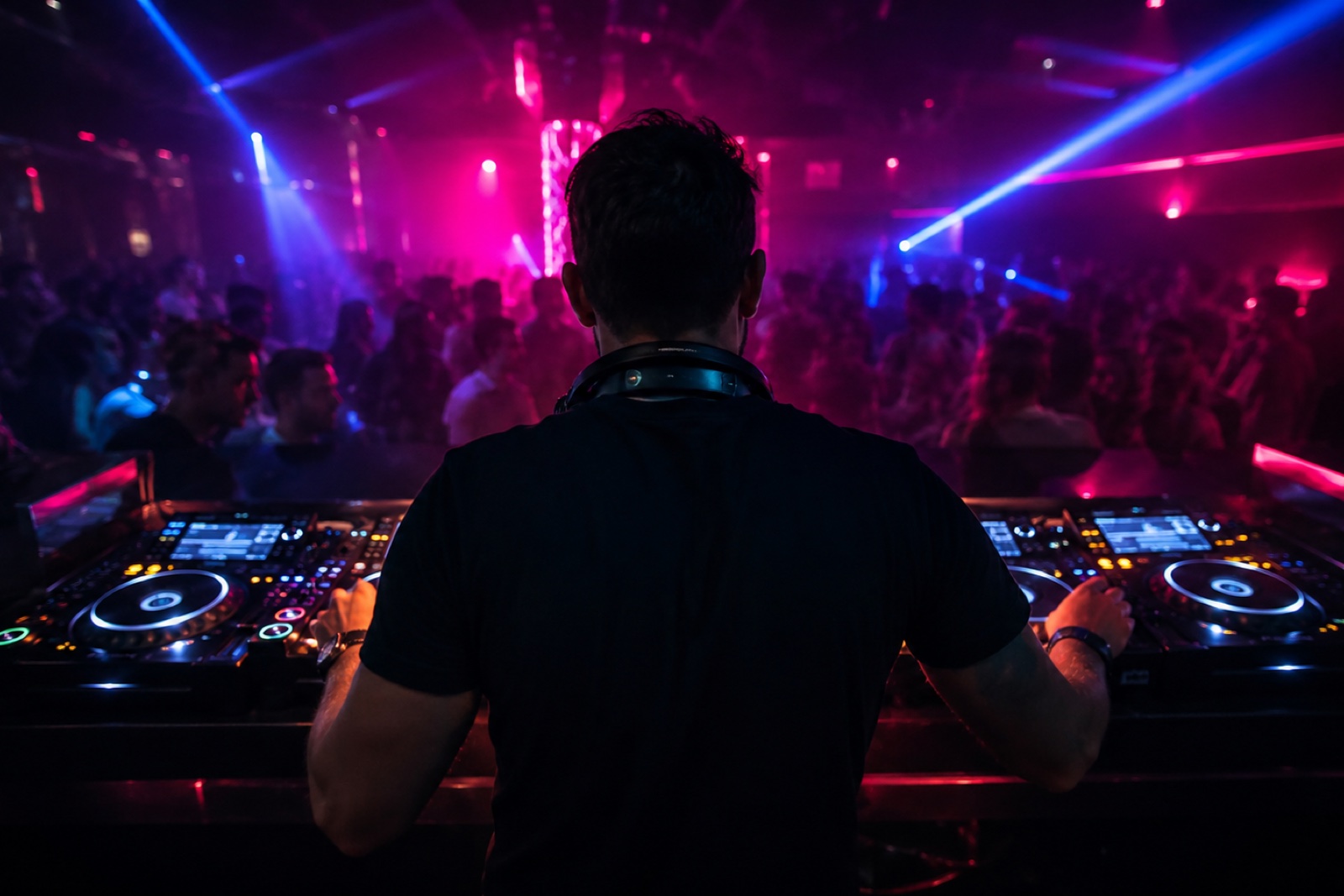
The short live clip is the whole pitch One short video does more than your entire bio. Not a polished aftermovie with drone shots and color grading. A booker can spot a promo edit. They want a phone-shot or booth-cam clip that shows three things in under a minute: you mixing live, the room reacting, and a recognizable moment of energy (a drop landing, hands up, a crowd singing a vocal). Floor reaction is the proof. Lighting and resolution matter less than seeing real people respond to what you are doing.
Put a one-line caption on it: "Peak time, [Club], March 2026." Context turns a clip into evidence. If the only footage you have is a half-empty room, do not post it. A booker would rather see you nail a packed basement than coast through an empty big room.
The numbers that matter, stated plainly Socials with real, current figures, not screenshots from your peak two years ago. Bookers cross-check, so do not inflate. What actually moves a decision: - Monthly listeners on Spotify and your top track's stream count, with the city breakdown if their market shows up in it - Instagram and TikTok followers plus a rough sense of which posts pull real saves and shares, not just views - Your strongest single proof point stated in one line (a sold-out room, a festival slot, a track that charted on a respected playlist or Beatport sub-genre)
Two contrarian moves. First, lead with the metric that is genuinely good and drop the ones that are weak. A booker reading "engaged local following in [their city]" cares more than a big follower count spread across countries that will never buy a ticket. Second, location-weight your data. If you can show a promoter that your audience clusters in their city, you have just made their risk calculation for them.
The tech rider that signals you are not a headache This is the most skipped section by artists and the one that quietly tells a promoter you are a professional. Keep it to a single, clean page or a short scrollable block. List exactly what you need: number and model of CDJs (and whether you are fine on the house standard, which most working DJs should be), the mixer you prefer, monitor needs, and whether you play off USB, a controller, or your own setup. If you bring nothing exotic, say so. "Standard club setup, 2x current-gen players plus mixer, I bring my own USBs and headphones" is music to a production manager's ears. Attach a simple logistics line too: do you need accommodation, what are your travel origins, and your fee range or "on request." You do not have to publish a number, but signaling that there is a structure saves a back-and-forth.
Host it as one link, and one link only The entire kit lives behind a single URL you can paste into a DM or an email. When a promoter asks "got a press kit?", you send one link and they get everything without downloading anything. A hosted EPK page (a dedicated builder, a clean one-pager on your own domain, or a well-structured single page) beats a PDF attachment, a Google Drive folder that asks for access, or a transfer link that expires. If your link fails or asks them to request permission, that is a dead pitch. Under that one link, give them downloadable assets in a clearly labeled spot: a high-res press shot in both vertical and horizontal crops so it works for a poster and a story, your logo, and a short copy-paste bio they can drop straight into event copy. Make their marketing easy and you become the easy booking.
The press shot and the bio, done right One strong high-res image beats a gallery of ten. It should be recent, look like you on a real night, and be usable by their designer without a fight. Provide a vertical and a horizontal version so it fits both a flyer and an Instagram story without awkward cropping. The bio is short. Three sentences for the scan version, one tight paragraph for the long version. Lead with what you sound like and the strongest proof, not where you grew up. "[Name] plays hypnotic, peak-time techno and has held rooms at [Venue] and [Festival]" does more in one line than a paragraph of adjectives. Write it so a promoter can lift it straight into their event listing.
Tailor the top of every pitch The kit is fixed. The first two lines you send with it are not, and that is where bookings are won. A booker can tell a copy-paste blast instantly, and a blast gets deleted. Before you hit send, change three things: name their venue or night, reference their city or a relevant date you are routing near, and point to the one proof point that matters to them specifically. If they book techno, your house numbers are noise. Send the techno clip and the techno crowd. Keep a few variants of your link's landing line or a short pinned note for different rooms (club night, festival, warm-up vs headline). Same kit, different framing. The promoter should feel like the pitch was built for their room, because the part they read first was.
The 12-point EPK checklist Screenshot this and audit your kit against it tonight: - One live clip, around a minute, real crowd reaction, captioned with venue and date - Current, honest social numbers with city breakdown where it helps - One standout proof point stated in a single line - A clean one-page tech rider (players, mixer, monitors, what you bring) - A logistics line (travel origin, accommodation, fee on request) - High-res press shot in vertical and horizontal crops - Downloadable logo file - A three-sentence scan bio plus one paragraph long bio, copy-paste ready - Links to Spotify, SoundCloud, Beatport, and your two strongest socials - Booking contact that goes to a real, monitored inbox - The whole thing behind one link with no download or access request - A per-pitch top line you rewrite for every promoter
What to cut: the long life story, genre stacking, expired or sourceless quotes, a discography wall, low-energy or empty-room footage, and any asset that lives behind a download or a permission wall. If it does not help a booker say yes in the first minute, it is working against you.
Build the kit once, then keep the clip and the numbers fresh every quarter. The artists who get rebooked are not the ones with the slickest PDF. They are the ones a promoter can evaluate, trust, and market in under a minute.
Quick answers
Do I need an EPK if I am still mostly playing small local gigs?
Yes, and it matters more at that stage, not less. Smaller promoters are taking a bigger relative risk on an unknown, so a clean one-link kit that proves you can hold a room and that you are easy to work with is exactly what tips a maybe into a yes. You do not need festival numbers. You need a real clip, honest figures, and a tech rider that says you are no trouble.
My follower count is low. Should I leave numbers out entirely?
No. Leaving them out reads as hiding them, and bookers assume the worst. Instead lead with whatever is genuinely strong, even if it is a single metric like high local engagement or a track that overperformed on saves, and frame the rest qualitatively. A small but clearly engaged local audience in the promoter's own city often beats a big diffuse number, so weight your data toward what helps them sell tickets.
What is the single most common mistake that kills a DJ pitch?
Sending a download instead of a link. The moment a promoter has to open a heavy PDF, request Drive access, or grab a file that expires, you have added friction at the exact second they are deciding, and most will just move on. Host everything behind one URL that loads instantly, and put your best live clip at the very top of it.