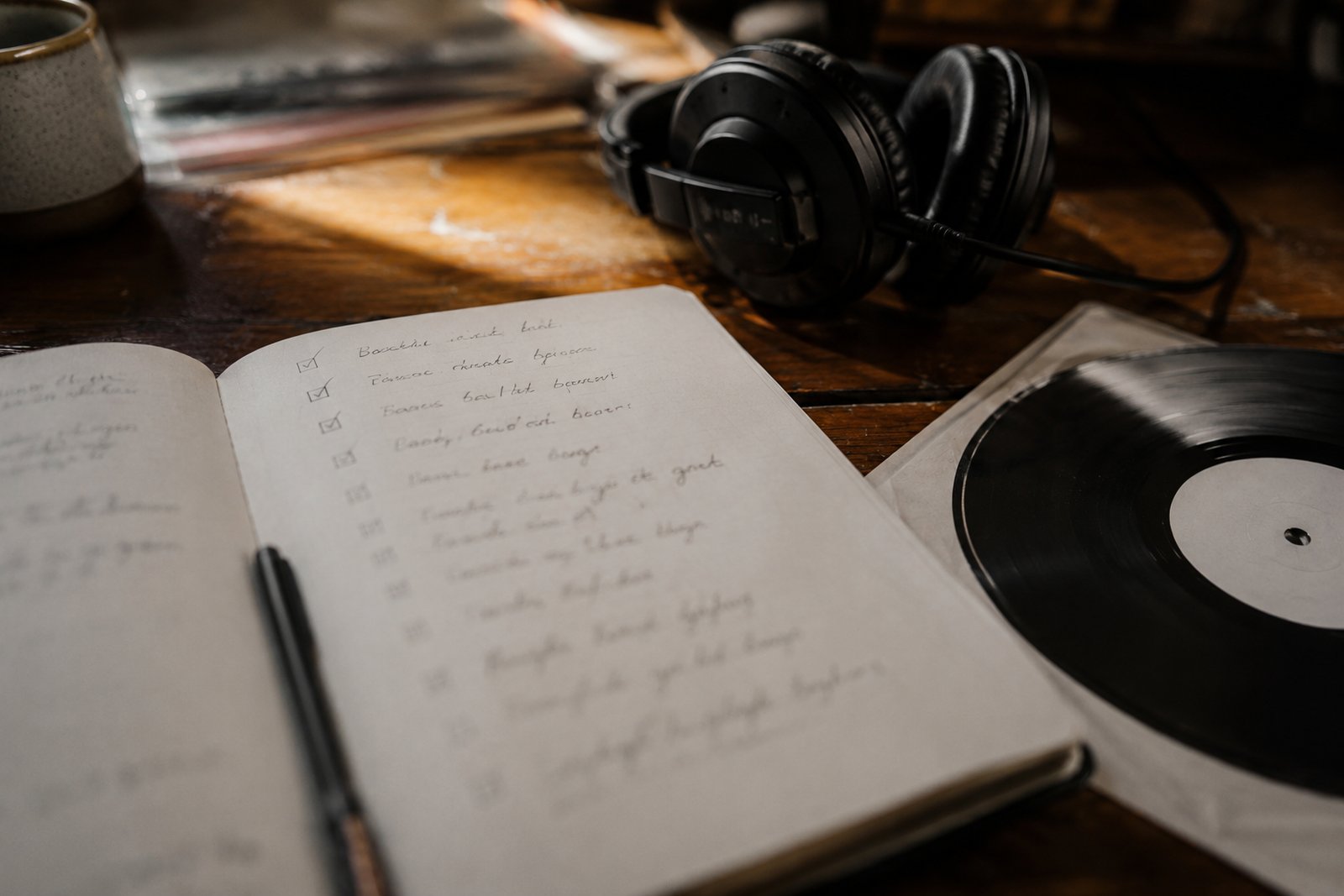
What are the best tools for music release checklists and planning?
The best tools for music release checklists are template-based project apps: Notion and Airtable for reusable timelines, Trello for a simple board, and a shared calendar for dates. The real win is a duplicatable template you clone for every release, not the specific app.
A release has dozens of moving parts spread over weeks, and they don't line up neatly. Artwork, masters, the distribution upload, playlist pitching, the pre-save link, socials, press. All stacked, all overlapping, all with hard deadlines. Miss the distribution window and your release date moves whether you like it or not.
A checklist is what stops a release from turning into a panic. But a checklist you scribble fresh each time is almost as useless as none, because you'll forget a step at the exact worst moment. The trick is a reusable system you clone for every release. I've seen artists run calmer launches off one good template than labels manage off a group chat. Here are the tools that do it, and how to set them up.
A template beats a fresh list every time
The biggest upgrade isn't the app. It's making your checklist a template you duplicate. Build it once, every step and its timing, then copy it for each release. You stop leaning on memory, and the list gets smarter every cycle as you add the steps you forgot last time.
This is why a basic to-do app falls short here. It handles one-off tasks fine, but it makes you rebuild the same list endlessly, which is exactly when something slips. A release needs a tool that treats your checklist as a reusable blueprint, with deadlines hung off a release date that shifts the whole timeline when it moves.
Notion: the flexible favorite
Notion is the popular pick because templates are baked into how it works. You build a release template with sections for pre-release, release week, and post-release, fill in the tasks, and duplicate it for every single or EP. You can drop in notes, embed the artwork, and link related pages, all in one place.
The catch: Notion's date handling is lighter than a real project tool. It won't auto-shift every deadline when your release date moves, so you nudge dates by hand. For most independent artists releasing a handful of times a year, that's a fair price for how pleasant and flexible the thing is.
A release template skeleton that works:
- Six weeks out: finalize the master, start artwork, plan the campaign.
- Three to four weeks out: upload to the distributor, set up the pre-save, pitch playlists.
- Release week: pre-save reminders, socials, thank the curators who added you.
- Post-release: read the analytics, plan the next push, log what to fix next time.
Airtable: power and overview
Airtable shines if you release often or run several artists, because every task is a record you can filter, sort, and flip into a calendar or board. One base holds every release and every task, then you filter to a single release or zoom out across the whole quarter in a second.
It's more setup than Notion and it's overkill for someone dropping two singles a year. But if you live in the details and want to see everything at once, the overview is hard to beat. And the same base can hold your catalog and splits, so your planning and your records sit in one place instead of two.
A good release plan is boring on purpose. The drama belongs in the music, never in whether someone remembered to upload it on time.
Trello and the simple-board crowd
If databases make your eyes glaze over, a board is your friend. Trello gives you columns, To Do, Doing, Done, with a card per task you drag across as you go. It's visual, fast to learn, and honestly satisfying to use.
You can save a release board as a template and copy it each time, which covers the reusability rule. The limit: Trello is light on timeline and dependencies, so it tells you what to do but not always when, in relation to everything else. Paired with a calendar, it's plenty for a lot of artists.
Match the tool to how you think:
- Love flexible docs and notes: Notion.
- Want filtering, calendar views, and scale: Airtable.
- Think in cards and columns: Trello.
Don't forget the calendar layer
Whatever you build the checklist in, the dates need to live somewhere everyone sees. A shared Google Calendar with release dates, pitch deadlines, and content drops keeps the timeline in front of the whole team, not buried in one app one person opens. The classic miss is a perfect checklist that only the planner ever looks at.
Tie it together with one habit. At the start of every release you clone the template, set the date, and work backward. No improvising the steps, no rebuilding from scratch, no praying you remember the pre-save deadline. The system carries the memory so your attention goes to the parts that are actually creative.
Here's the thing nobody likes admitting. A release rarely flops for lack of talent or budget. It flops because a step got lost in the noise. A good checklist tool, used as a real template, turns a chaotic launch into a calm one, and a calm launch is one where you can actually react to what's working. At VRMA the checklist isn't bureaucracy to us. It's the boring machine that quietly makes sure nothing slips, so everyone gets to focus on the music. That's the whole point of having a system, or a team, behind you.
Quick answers
What is the best app for a music release checklist?
There's no single best app, but Notion is the most popular for its flexible, duplicatable templates. Airtable is better if you release often or run several artists, and Trello suits people who think in boards. The real key is using whichever one as a reusable template, not a one-off list you rebuild.
How far in advance should a release checklist start?
Start about six weeks out for a single, longer for an EP or album, especially if you want playlist consideration. Distributors recommend delivering at least three to four weeks ahead so editorial pitching works. Build your template backward from release day so every deadline gets a little breathing room instead of a scramble.
Why not just use a basic to-do list app?
Basic to-do apps handle one-off tasks but make you rebuild the same release steps every time, which is exactly when you forget one. A release needs a template you duplicate, with deadlines tied to the release date. Notion, Airtable, and Trello all support reusable templates that a plain to-do app simply can't.
What should a music release checklist include?
Group it into pre-release, release week, and post-release. Pre-release covers the master, artwork, distribution upload, pre-save, and playlist pitching. Release week covers reminders, socials, and thanking curators. Post-release covers analytics and the next push. Add any step you missed each cycle so the template keeps getting better.